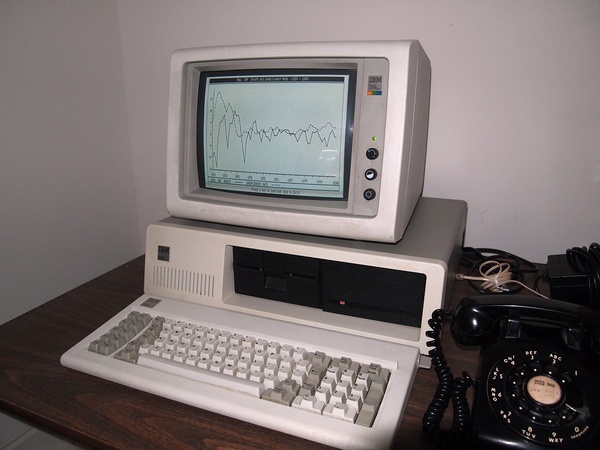
Early Home Computers
The history of the personal computer as a mass-market consumer electronic device began with the microcomputer revolution of the 1970s. A personal computer is one intended for interactive individual use, as opposed to a mainframe computer where the end user's requests are filtered through operating staff, or a time-sharing system in which one large processor is shared by many individuals. After the development of the microprocessor, individual personal computers were low enough in cost that they eventually became affordable consumer goods. Early personal computers – generally called microcomputers – were sold often in electronic kit form and in limited numbers, and were of interest mostly to hobbyists and technicians.
Mainframes, minicomputers, and microcomputers
Computer terminals were used for time sharing access to central computers. Before the introduction of the microprocessor in the early 1970s, computers were generally large, costly systems owned by large corporations, universities, government agencies, and similar-sized institutions. End users generally did not directly interact with the machine, but instead would prepare tasks for the computer on off-line equipment, such as card punches. A number of assignments for the computer would be gathered up and processed in batch mode. After the job had completed, users could collect the results. In some cases, it could take hours or days between submitting a job to the computing center and receiving the output. A more interactive form of computer use developed commercially by the middle 1960s. In a time-sharing system, multiple computer terminals let many people share the use of one mainframe computer processor. This was common in business applications and in science and engineering.
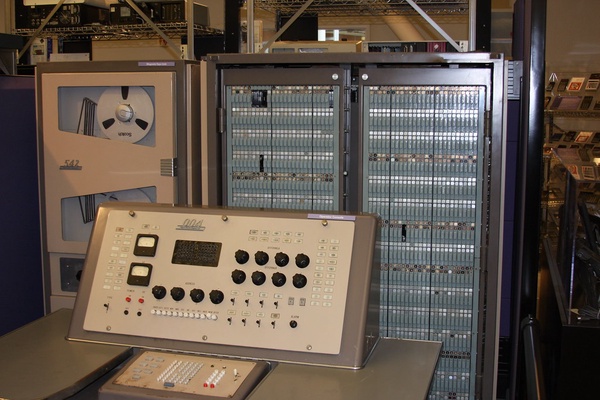
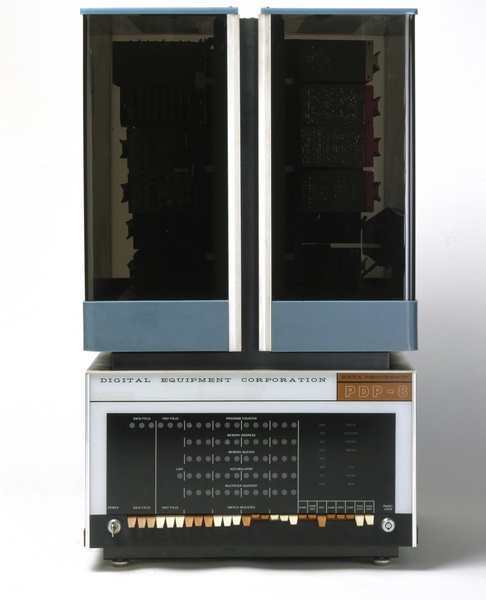
Some of the first computers that might be called "personal" were early minicomputers such as the LINC and PDP-8, and later on VAX and larger minicomputers from Digital Equipment Corporation (DEC), Data General, Prime Computer, and others. By today's standards, they were very large (about the size of a refrigerator) and cost prohibitive (typically tens of thousands of US dollars). However, they were much smaller, less expensive, and generally simpler to operate than many of the mainframe computers of the time. Therefore, they were accessible for individual laboratories and research projects. Minicomputers largely freed these organizations from the batch processing and bureaucracy of a commercial or university computing center.
In addition, minicomputers were relatively interactive and soon had their own operating systems. The minicomputer Xerox Alto (1973) was a landmark step in the development of personal computers because of its graphical user interface, bit-mapped high resolution screen, large internal and external memory storage, mouse, and special software.
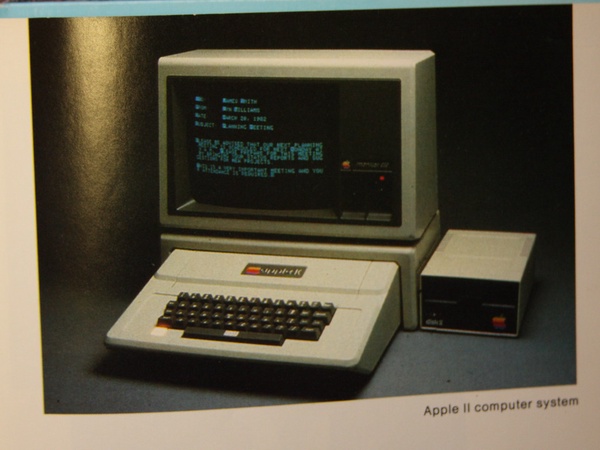
Apple II
Steve Wozniak (known as "Woz"), a regular visitor to Homebrew Computer Club meetings, designed the single-board Apple I computer and first demonstrated it there. With specifications in hand and an order for 100 machines at US$500 each from the Byte Shop, Woz and his friend Steve Jobs founded Apple Computer. About 200 of the machines sold before the company announced the Apple II as a complete computer. It had color graphics, a full QWERTY keyboard, and internal slots for expansion, which were mounted in a high quality streamlined plastic case. The monitor and I/O devices were sold separately. The original Apple II operating system was only the built-in BASIC interpreter contained in ROM. Apple DOS was added to support the diskette drive; the last version was "Apple DOS 3.3". Its higher price and lack of floating point BASIC, along with a lack of retail distribution sites, caused it to lag in sales behind the other Trinity machines until 1979, when it surpassed the PET. It was again pushed into 4th place when Atari introduced its popular Atari 8-bit systems.
The IBM PC
IBM responded to the success of the Apple II with the IBM PC, released in August 1981. Like the Apple II and S-100 systems, it was based on an open, card-based architecture, which allowed third parties to develop for it. It used the Intel 8088 CPU running at 4.77 MHz, containing 29,000 transistors. The first model used an audio cassette for external storage, though there was an expensive floppy disk option. The cassette option was never popular and was removed in the PC XT of 1983.[62] The XT added a 10MB hard drive in place of one of the two floppy disks and increased the number of expansion slots from 5 to 8. While the original PC design could accommodate only up to 64k on the main board, the architecture was able to accommodate up to 640KB of RAM, with the rest on cards. Later revisions of the design increased the limit to 256K on the main board. The IBM PC typically came with PC DOS, an operating system based on Gary Kildall's CP/M-80 operating system. In 1980, IBM approached Digital Research, Kildall's company, for a version of CP/M for its upcoming IBM PC. Kildall's wife and business partner, Dorothy McEwen, met with the IBM representatives who were unable to negotiate a standard non-disclosure agreement with her. IBM turned to Bill Gates, who was already providing the ROM BASIC interpreter for the PC. Gates offered to provide 86-DOS, developed by Tim Paterson of Seattle Computer Products. IBM rebranded it as PC DOS, while Microsoft sold variations and upgrades as MS-DOS.